

“Bone‑on‑Bone” Means Stop Moving?
STEADY STEPS
for Adults 60+
Myth vs Fact
Season 2 • Episode 1

Friendly reminder
This article is general education, not medical advice. If you have severe pain, a hot/red swollen joint, fever, chest pain,
or you suddenly can’t bear weight, consider seeking medical help.
In this post
Myth vs Fact
Why “Scary Words” Can Mislead
“Bone‑on‑bone” is often used as a description from imaging. But your day‑to‑day ability depends on more than a picture— things like strength, balance, sleep, stress, and how your joint responds to activity.
A better question than “What does it look like?”
“What can I do safely today – and how do I build from there?”
The “Dose” Idea (Small + Repeatable)
Think of movement like medicine: too much can flare symptoms, and too little can lead to more stiffness and weakness. The sweet spot is the smallest amount you can repeat consistently.
Too much
More swelling • more limping • sharper pain
Too little
More stiffness • less confidence • more fear of movement
Just right
Small • comfortable • repeatable

3 Joint‑Friendly Rules You Can Try
Rule 1: Start smaller
Choose a short, comfortable walk.
Stop while you still feel okay.
Rule 2: Make it easier
Flat route • supportive shoes • shorter steps.
Easy beats heroic.
Rule 3: Next‑day check
If tomorrow is clearly worse, scale back.
More swelling/limping = too much.
Steady Steps rule: Your best plan is the one you can repeat.
Support Is Smart (Not a Setback)
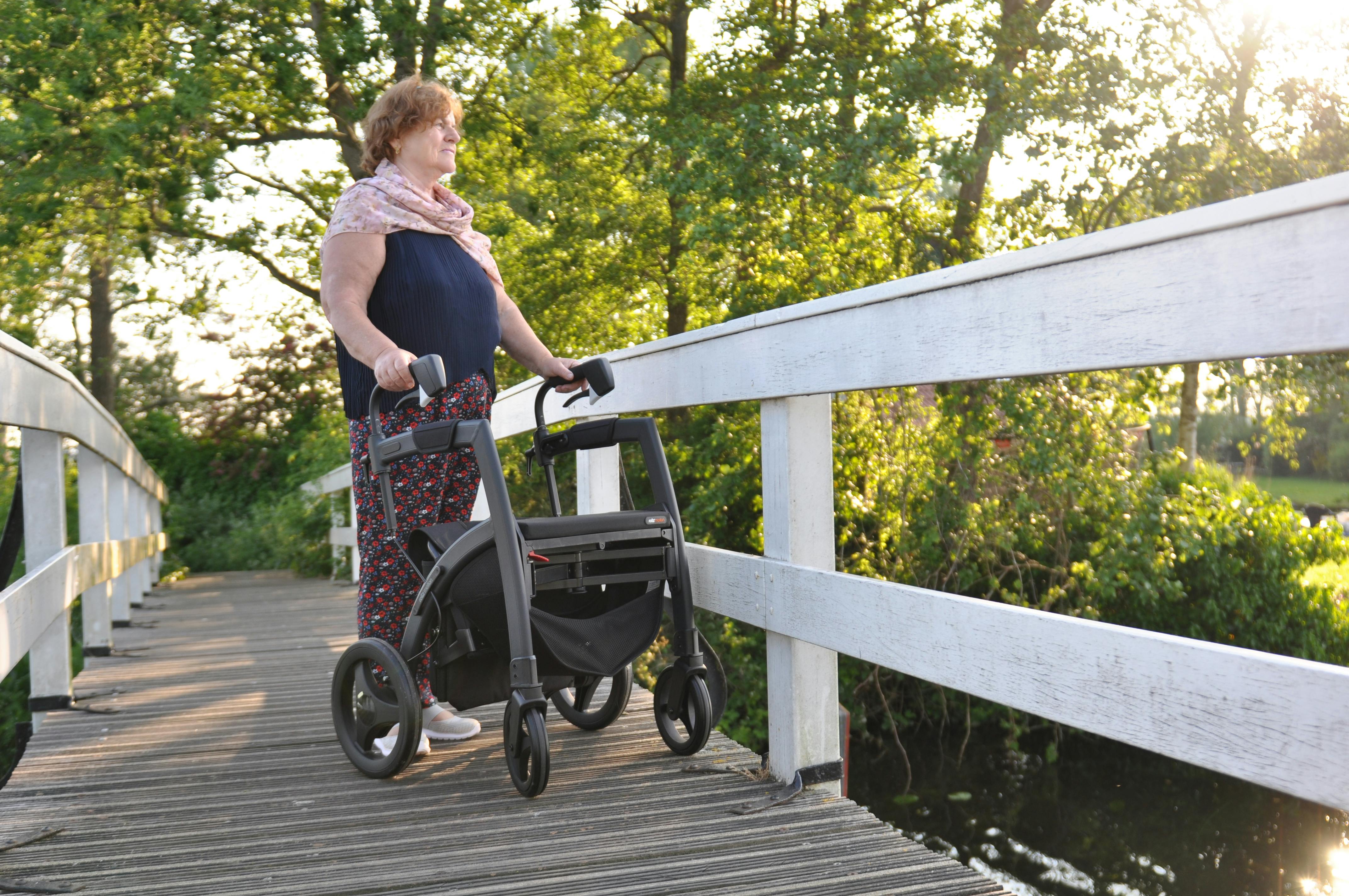
If you need support, that’s smart. A cane, a walking pole, or holding a stable surface can reduce strain while you stay active.

When to Get Help
Consider medical help if you notice:
- Hot/red swollen joint or fever
- Sudden inability to bear weight
- Severe pain or rapid worsening
- Chest pain, faintness, or unusual shortness of breath
Next episode
Swap This → For That
One heavy grocery bag on one side… swapped for two lighter loads that feel easier on joints.
Save this for later
Small daily choices add up – especially when they’re repeatable.
Read more STEADY STEPS →